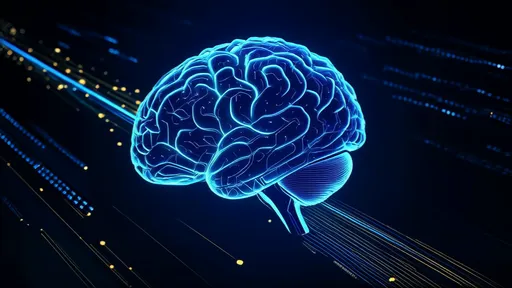
In the rapidly evolving landscape of computing, neuromorphic technology stands out as one of the most promising frontiers. Drawing inspiration from the human brain, these advanced systems are redefining what is possible in terms of efficiency, speed, and cognitive capabilities. The latest breakthroughs in neuromorphic chips are not just incremental improvements; they represent a fundamental shift in how we process information, promising to transform industries from artificial intelligence to robotics.
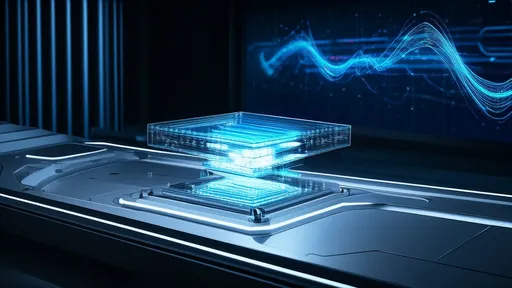
At the heart of this revolution lies the design philosophy of neuromorphic engineering. Unlike traditional von Neumann architectures, which separate memory and processing units, neuromorphic chips integrate these functions in a way that mimics the neural networks of the brain. This design allows for massively parallel computation, significantly reducing latency and energy consumption. Recent advancements have pushed the boundaries of this integration, enabling chips to handle complex tasks with unprecedented efficiency.
One of the most significant performance enhancements in neuromorphic computing comes from the development of novel materials and transistor designs. Researchers are experimenting with memristors, spintronics, and other emerging technologies that can emulate synaptic behavior more accurately. These components allow for dynamic weight adjustments in neural networks, facilitating real-time learning and adaptation. The result is a chip that not only processes information faster but also learns from its environment, much like a biological brain.
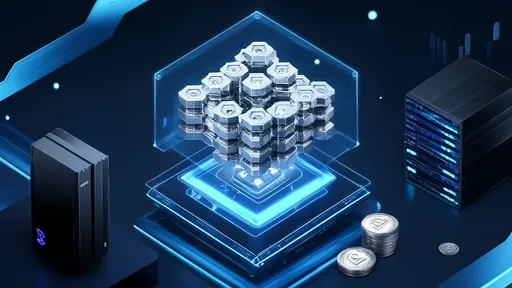
Another critical area of progress is in scalability. Early neuromorphic systems were limited by the number of neurons and synapses they could simulate. However, recent designs have overcome these limitations through three-dimensional integration and advanced fabrication techniques. Companies and research institutions are now producing chips with millions of artificial neurons, capable of tackling tasks that were once the exclusive domain of supercomputers. This scalability is crucial for applications requiring real-time data processing, such as autonomous vehicles and large-scale sensor networks.
Energy efficiency remains a cornerstone of neuromorphic computing's appeal. Traditional processors consume substantial power, especially when handling AI workloads. In contrast, neuromorphic chips operate at a fraction of the energy, thanks to their event-driven architecture. Neurons in these systems only activate when necessary, drastically reducing power consumption. This makes them ideal for edge computing and IoT devices, where battery life and thermal management are critical constraints.
The software ecosystem surrounding neuromorphic hardware is also maturing rapidly. New programming frameworks and algorithms are being developed to harness the full potential of these chips. These tools allow developers to design and deploy neural networks that leverage the unique capabilities of neuromorphic processors, from sparse coding to temporal pattern recognition. As this software stack becomes more accessible, we can expect a surge in innovative applications across various domains.
In the realm of artificial intelligence, neuromorphic chips are enabling more efficient and robust machine learning models. Their ability to process temporal and spatial data in parallel makes them particularly well-suited for tasks like video analysis, natural language processing, and predictive modeling. Moreover, their low-power operation allows for continuous learning on-device, reducing the need for cloud connectivity and enhancing data privacy.
Looking ahead, the convergence of neuromorphic computing with other emerging technologies like quantum computing and advanced robotics promises even greater breakthroughs. Hybrid systems that combine the strengths of different architectures could unlock new capabilities, from general artificial intelligence to highly adaptive autonomous systems. The ongoing research in this field suggests that we are only scratching the surface of what neuromorphic engineering can achieve.
In conclusion, the performance enhancements in neuromorphic computing are paving the way for a new era of intelligent systems. By emulating the brain's efficiency and adaptability, these chips are set to revolutionize how we interact with technology. As research continues to advance, we can anticipate even more sophisticated and powerful neuromorphic solutions that will shape the future of computing.

By /Aug 25, 2025
By /Aug 25, 2025

By /Aug 25, 2025

By /Aug 25, 2025
By /Aug 25, 2025
By /Aug 25, 2025

By /Aug 25, 2025
By /Aug 25, 2025

By /Aug 25, 2025
By /Aug 25, 2025

By /Aug 25, 2025
By /Aug 25, 2025

By /Aug 25, 2025

By /Aug 25, 2025

By /Aug 25, 2025

By /Aug 25, 2025
By /Aug 25, 2025
By /Aug 25, 2025

By /Aug 25, 2025

By /Aug 25, 2025