Smart Grid Construction: A New Solution for Renewable Energy Integration

Aug 25, 2025 By

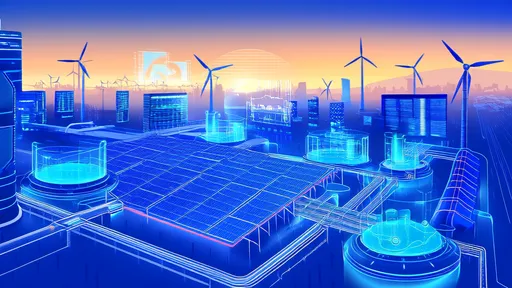
As dawn breaks over the energy sector, a quiet revolution is reshaping how we power our world. The integration of renewable energy sources into traditional power grids has long been both a promise and a challenge—until now. Smart grid technologies are emerging as the critical bridge between intermittent renewables and reliable electricity delivery, creating a symbiotic relationship that could redefine our energy future.

The fundamental challenge of renewables has always been their variability. Solar panels generate nothing when clouds obscure the sun, and wind turbines stand still during calm periods. Traditional grid systems, designed for consistent power generation from fossil fuels, struggle to accommodate these fluctuations. The consequences range from minor voltage dips to complete blackouts when supply and demand fall out of balance. For decades, this inherent unreliability limited renewable energy to a supplementary role in the energy mix.

Enter the smart grid—an intelligent network that uses digital technology to monitor and manage the transport of electricity from all generation sources to meet the varying electricity demands of end-users. Unlike conventional grids, smart grids incorporate two-way communication between utilities and consumers, advanced sensing along transmission lines, and real-time data analytics. This technological ecosystem doesn't just deliver power; it processes information to make intelligent decisions about energy distribution.

At the heart of this transformation are advanced metering infrastructure (AMI) systems that go far beyond simple consumption tracking. These sophisticated devices provide real-time data on energy usage patterns, grid performance, and even equipment health. Utilities can now detect and respond to changes in renewable generation within seconds rather than hours. When solar production drops due to passing clouds, the system automatically compensates by drawing from distributed battery storage or adjusting demand response programs.

Perhaps the most groundbreaking development lies in predictive analytics powered by artificial intelligence. Machine learning algorithms now process vast datasets—from weather patterns and historical consumption to real-time grid conditions—to forecast renewable energy availability with astonishing accuracy. These systems can predict wind patterns hours in advance, anticipate solar generation based on cloud movement models, and even adjust grid operations preemptively. The grid is evolving from a reactive system to a predictive one.

Energy storage represents another critical pillar of the renewable integration puzzle. The latest grid-scale battery technologies have moved beyond simple emergency backup functions to become active grid management tools. Lithium-ion batteries, flow batteries, and emerging technologies like gravity storage systems work in concert with smart grid controls to store excess renewable energy during peak generation periods and release it during high demand. This transforms intermittent renewables into dispatchable resources that can be called upon when needed.

Demand response programs have evolved equally dramatically through smart grid implementation. Instead of simply asking consumers to reduce usage during peak times, modern systems enable automated load shifting. Smart appliances in homes and businesses can receive signals from the grid to temporarily adjust their operation—delaying refrigerator cycles, slightly modifying thermostat settings, or pausing electric vehicle charging—without impacting consumer comfort. This creates a virtual power plant effect, where reduced demand functions as additional generation capacity.

The distributed nature of renewable energy sources necessitates a fundamental rethinking of grid architecture. Traditional grids followed a hub-and-spoke model with large central power plants feeding outward. Renewable integration requires a more decentralized approach where generation occurs at countless points across the system—from rooftop solar panels to community wind farms. Smart grids manage this complexity through autonomous control systems that can isolate sections of the grid during disturbances while maintaining service elsewhere.

Cybersecurity has become paramount as grids grow smarter and more connected. The same digital technologies that enable renewable integration create potential vulnerabilities. Next-generation smart grids incorporate robust security protocols including blockchain-based authentication, encrypted communications, and AI-powered threat detection. These systems continuously monitor for anomalous activity while maintaining the privacy of consumer data—a balancing act that requires sophisticated technological solutions.

The human element remains crucial in this technological transformation. Grid operators now work in control centers that resemble mission operations for space agencies. Large visualization walls display real-time data streams, predictive analytics, and system status across entire regions. Operators receive AI-assisted decision support that recommends optimal responses to changing conditions, but human expertise still guides critical decisions during complex scenarios.

Regulatory frameworks and market structures are evolving to support this new paradigm. Traditional utility models based solely on energy delivery volume are giving way to value-based compensation that rewards grid services like frequency regulation and voltage support. Markets for distributed energy resources allow even small renewable generators to participate in grid stability services, creating economic incentives for further renewable deployment.

The environmental implications extend beyond carbon reduction. By enabling higher renewable penetration, smart grids reduce not only greenhouse gas emissions but also water consumption for power generation and minimize other environmental impacts associated with fossil fuel extraction and combustion. The integration of electric vehicles into smart grids creates additional environmental synergies, with vehicle batteries serving as distributed storage while charging schedules optimize for renewable availability.

Looking ahead, the convergence of smart grids with other technological trends promises even greater transformation. The internet of things will connect billions of devices to grid management systems. 5G networks will enable near-instantaneous communication across the energy ecosystem. Quantum computing may eventually optimize grid operations in ways currently unimaginable. Each advancement creates new opportunities for renewable integration while presenting new challenges for system designers.

Implementation across different regions reveals both universal principles and necessary adaptations. Densely populated urban areas focus on managing distributed solar integration and electric vehicle charging infrastructure. Rural regions might emphasize grid resilience and managing long transmission lines connecting remote renewable installations. Island grids provide laboratories for high-renewable penetration scenarios, while continental interconnections enable renewable energy sharing across time zones and climate regions.

The economic case for smart grid-enabled renewable integration continues to strengthen. While initial investment requirements are substantial, the long-term benefits include reduced fuel costs, deferred infrastructure investment, improved reliability, and job creation in both technology and renewable sectors. Many systems achieve payback within reasonable timeframes while creating more resilient energy economies less vulnerable to fuel price volatility.

Education and workforce development represent critical components of the transition. Utilities need employees who understand both traditional power engineering and digital technologies. New roles emerge specializing in data analytics, cybersecurity, and renewable integration management. Universities and technical colleges are developing programs that bridge these historically separate disciplines, creating a new generation of energy professionals.

Consumer engagement and acceptance remain essential for maximizing smart grid benefits. Successful programs combine technology deployment with education about how consumers can benefit through time-based pricing, participation in demand response programs, and eventually even earning revenue from their own renewable generation and storage systems. The relationship between utilities and consumers evolves from transactional to collaborative.

As the technology matures, standardization becomes increasingly important. Interoperability between equipment from different manufacturers, consistent communication protocols, and harmonized regulatory approaches enable economies of scale while maintaining system reliability. International organizations work to develop frameworks that accommodate national differences while enabling global technological progress.

The journey toward comprehensive renewable integration through smart grids continues to evolve. Each technological breakthrough addresses existing challenges while revealing new opportunities. What remains constant is the fundamental transformation occurring across our energy systems—a shift from centralized fossil-based generation to decentralized renewable networks intelligently managed through digital technology. This represents not merely an incremental improvement but a reimagining of how societies produce, distribute, and consume energy.

In the final analysis, smart grid technologies have moved from theoretical concept to practical solution for renewable integration. The technical challenges that once seemed insurmountable are being addressed through innovation across multiple disciplines. While work remains, the path forward is clear—continued advancement toward energy systems that are simultaneously cleaner, more reliable, and more efficient than anything previously imagined. The integration of renewables through smart grids represents one of the most significant infrastructure transformations of our time, with implications that will resonate for generations to come.

Recommend Posts
Science

New Advances in Quantum Gravity Theories: Loop Quantum Gravity and String Theory

By /Aug 25, 2025

Recent developments in quantum gravity have brought both loop quantum gravity and string theory into sharper focus, with each framework proposing increasingly testable predictions about the nature of spacetime. The perennial challenge of unifying general relativity with quantum mechanics continues to drive theoretical innovation, and this year has seen remarkable strides in mathematical rigor, conceptual clarity, and potential experimental connections.
Science

Dark Matter Search: Latest Constraints from Underground Experiments

By /Aug 25, 2025

The search for dark matter continues to challenge and inspire physicists worldwide, with underground experiments providing some of the most stringent constraints on potential dark matter particles. These subterranean laboratories, shielded from cosmic rays and other background radiation, offer a pristine environment for detecting the faintest signals that might betray the presence of this elusive substance. Recent results from a variety of these experiments have pushed the boundaries of what we know, narrowing down the possible characteristics of dark matter and compelling theorists to refine their models.
Science

Neutrino Oscillation Experiments: Progress in Measuring Lepton CP Violation

By /Aug 25, 2025

In the intricate dance of subatomic particles, few phenomena have captivated physicists more profoundly than neutrino oscillations. The revelation that these elusive particles can morph from one flavor to another as they travel through space not only solved the long-standing solar neutrino problem but also opened a window into physics beyond the Standard Model. At the heart of this ongoing investigation lies one of the most tantalizing puzzles: the measurement of charge-parity (CP) violation in the lepton sector.
Science

Gravitational Wave Detection: A New Era of Multi-Messenger Astronomy

By /Aug 25, 2025

The faint ripples in spacetime first theorized by Einstein a century ago have ushered in an entirely new chapter for observational astronomy. The direct detection of gravitational waves by the LIGO and Virgo collaborations did not merely confirm a prediction; it flung open a new window on the universe, one that does not rely on light. This has given birth to the era of multi-messenger astronomy, a paradigm shift where cosmic events are observed through their gravitational waves, electromagnetic radiation, and even neutrino emissions simultaneously. It is a holistic approach, transforming our understanding of the most violent and energetic processes in the cosmos.
Science

Higgs Boson Research: New Physics Exploration at the LHC

By /Aug 25, 2025

The Large Hadron Collider, the world's most powerful particle accelerator, continues to probe the deepest mysteries of the universe a decade after its crowning achievement: the discovery of the Higgs boson. This monumental discovery in 2012 confirmed the existence of the final piece of the Standard Model, the theoretical framework describing the fundamental particles and forces. Yet, rather than providing a final answer, the Higgs boson has become the most powerful new tool in the physicist's arsenal, a unique portal into questions the Standard Model itself cannot answer. The LHC's ongoing mission, particularly its high-luminosity upgrades, is now squarely focused on using the Higgs as a guide to the new physics that must lie beyond.
Science

Blockchain Applications: Decentralized Solutions in the Technology Field

By /Aug 25, 2025

The digital landscape is witnessing a paradigm shift, one that challenges the very foundations of how we conceive trust, data ownership, and organizational structure. At the heart of this transformation lies blockchain technology, a decentralized digital ledger system that promises to reshape industries by removing the need for central authorities and intermediaries. Its implications for the technology sector are particularly profound, offering a new architectural blueprint for building applications and services that are transparent, secure, and resilient.
Science

Key Breakthroughs in 6G Technology Research: Terahertz Communication

By /Aug 25, 2025

The relentless pursuit of faster, more reliable, and ubiquitous wireless connectivity has inevitably steered the global research community toward the next frontier: 6G. While still in its nascent conceptual stages, the vision for 6G is crystallizing around a paradigm shift far beyond incremental speed improvements. It promises to fuse the physical, digital, and biological worlds, enabling transformative applications like holographic communications, pervasive artificial intelligence, and the tactile internet. At the very heart of this ambitious vision lies a technological domain that has long tantalized scientists but remained just out of practical reach: terahertz communication. Recent breakthroughs in this field are not merely promising; they are fundamentally rewriting the playbook for what will be possible in the next decade.
Science

Neuromorphic Computing: Enhanced Performance of Brain-Inspired Chips

By /Aug 25, 2025

In the rapidly evolving landscape of computing, neuromorphic technology stands out as one of the most promising frontiers. Drawing inspiration from the human brain, these advanced systems are redefining what is possible in terms of efficiency, speed, and cognitive capabilities. The latest breakthroughs in neuromorphic chips are not just incremental improvements; they represent a fundamental shift in how we process information, promising to transform industries from artificial intelligence to robotics.
Science

Ethics in Artificial Intelligence: Development Framework for Trustworthy AI Systems

By /Aug 25, 2025

The development of artificial intelligence systems has accelerated at a breathtaking pace, bringing with it transformative potential across industries and societies. Yet this rapid advancement has also surfaced profound ethical challenges that demand urgent and thoughtful attention. As AI systems increasingly influence critical decisions in healthcare, finance, justice, and security, the need for trustworthy AI has never been more apparent. The conversation has shifted from mere technical capability to encompass broader questions of responsibility, transparency, and human values.
Science

Quantum Computing Hardware: Implementation Schemes for New Quantum Bits

By /Aug 25, 2025

Quantum computing hardware stands at the precipice of a transformative era, driven by relentless innovation in qubit design and implementation. While traditional superconducting qubits have dominated the landscape for years, recent breakthroughs in alternative qubit modalities are reshaping what’s possible in the pursuit of scalable, fault-tolerant quantum systems. These advances are not merely incremental; they represent fundamental shifts in how researchers approach the challenges of coherence, control, and connectivity.
Science

Infectious Disease Control: Rapid Response System for Emerging Infectious Diseases

By /Aug 25, 2025

The specter of emerging infectious diseases looms large over global public health, a stark reminder of our interconnected vulnerability. In recent decades, the world has witnessed the alarming speed with which novel pathogens can traverse borders, disrupting societies and economies with devastating efficiency. The COVID-19 pandemic served as a brutal catalyst, exposing critical fissures in national and international response frameworks. It underscored an undeniable truth: the traditional, reactive playbook for disease control is perilously inadequate for the 21st century. Consequently, the imperative to design, fund, and implement robust rapid response systems has shifted from a theoretical exercise to an urgent operational necessity. These systems are not merely about having plans on paper; they are about building a dynamic, agile, and resilient infrastructure capable of mounting a decisive counteroffensive from the moment a threat is detected.
Science

Research on Aging Mechanisms: Exploration of Intervention Strategies for Delaying Aging

By /Aug 25, 2025

The relentless march of time spares no one, yet the scientific quest to understand and potentially slow the aging process has accelerated into one of the most dynamic frontiers of biomedical research. For centuries, aging was considered an immutable, linear decline, a predetermined fate written into our biological code. Today, that view is being radically overturned. Researchers are no longer simply cataloging the symptoms of growing old; they are deciphering its fundamental mechanisms, treating aging not as an inevitability but as a malleable biological process—perhaps even a condition open to therapeutic intervention.
Science

Breakthrough in Brain-Computer Interface Progress: New Advancement in Restoring Motor Function for Paralyzed Patients

By /Aug 25, 2025

In a stunning development that reads like science fiction, researchers have successfully enabled paralyzed individuals to regain control of their limbs through revolutionary brain-computer interface technology. This breakthrough represents the culmination of decades of research and offers tangible hope to millions suffering from spinal cord injuries and neurological disorders worldwide.
Science

Precision Medicine Practice: Individualized Treatment Guided by Genomics

By /Aug 25, 2025

The landscape of modern medicine is undergoing a profound transformation, shifting from a one-size-fits-all approach to a more nuanced and individualized paradigm. At the heart of this revolution lies the burgeoning field of precision medicine, a discipline that leverages our growing understanding of the human genome to tailor medical care to the unique genetic makeup of each patient. This is not merely a theoretical concept confined to research papers; it is a dynamic and rapidly advancing practice that is already altering treatment protocols and improving patient outcomes across a spectrum of diseases, most notably in oncology.
Science

Expanding the Application of mRNA Vaccine Technology

By /Aug 25, 2025

The scientific world witnessed a quiet revolution when the first mRNA vaccines received emergency authorization for COVID-19. While their development was accelerated by the global pandemic, the foundations of this technology had been meticulously laid over decades of painstaking research. The spectacular success of these vaccines against SARS-CoV-2 did not mark an endpoint, but rather a powerful and resounding starting pistol. It signaled the beginning of a new era in medicine, one where the mRNA platform is rapidly being untethered from its initial application and is now being aimed at a breathtaking array of other diseases, promising to reshape our entire approach to treatment and prevention.
Science

Smart Grid Construction: A New Solution for Renewable Energy Integration

By /Aug 25, 2025

As dawn breaks over the energy sector, a quiet revolution is reshaping how we power our world. The integration of renewable energy sources into traditional power grids has long been both a promise and a challenge—until now. Smart grid technologies are emerging as the critical bridge between intermittent renewables and reliable electricity delivery, creating a symbiotic relationship that could redefine our energy future.
Science

Hydrogen Economy Layout: Breakthroughs in Green Hydrogen Production and Storage Transportation Technologies

By /Aug 25, 2025

The global energy landscape is undergoing a seismic shift, and hydrogen is increasingly positioned at the epicenter of this transformation. The vision of a hydrogen economy, once a speculative concept confined to academic papers and futurist conferences, is now materializing into concrete national strategies and multi-billion-dollar industrial projects. Central to this burgeoning ecosystem is the production and transportation of green hydrogen—hydrogen produced using renewable energy sources. The viability of the entire hydrogen economy hinges on our ability to master these two critical pillars: cost-effective, large-scale green hydrogen production and the development of a robust, efficient storage and transportation infrastructure.
Science

The Path to Commercialization of Solid-State Batteries in Energy Storage Technology Development

By /Aug 25, 2025

The commercialization of solid-state batteries represents one of the most anticipated technological shifts in the energy storage sector. For years, researchers and industry leaders have touted the potential of this technology to revolutionize everything from consumer electronics to electric vehicles and grid storage. Unlike conventional lithium-ion batteries, which use liquid electrolytes, solid-state batteries employ solid electrolytes, promising significant improvements in energy density, safety, and longevity. However, the path from laboratory breakthrough to widespread market adoption is fraught with technical, economic, and logistical challenges that must be navigated with precision and strategic foresight.
Science

Perovskite Solar Cell Efficiency Enhancement: Breakthrough in Stability

By /Aug 25, 2025

In the rapidly evolving landscape of renewable energy, perovskite solar cells have emerged as a promising technology with the potential to revolutionize photovoltaic efficiency. However, their commercial viability has long been hampered by issues related to stability and durability. Recent advancements are now signaling a turning point, as researchers report significant breakthroughs in enhancing the longevity and robustness of these cells. This progress not only underscores the scientific community's relentless pursuit of innovation but also paves the way for perovskite solar cells to compete more effectively with traditional silicon-based technologies.
Science

Fusion Energy Progress: New Records for Tokamak Devices

By /Aug 25, 2025

In a landmark achievement for fusion energy research, scientists at the Joint European Torus (JET) facility have set a new world record for sustained energy output from a tokamak reactor. The latest experiment, conducted in late 2023, produced 69 megajoules of energy over a 5.2-second pulse, surpassing previous milestones and reinforcing confidence in the viability of fusion as a future energy source. This breakthrough represents not merely an incremental improvement but a significant leap toward practical fusion power, demonstrating enhanced plasma stability and energy confinement techniques that could redefine the trajectory of global energy systems.