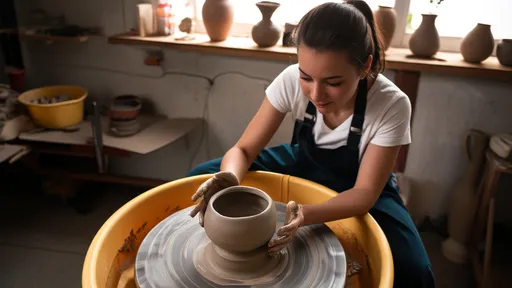
In the quiet hum of the pottery studio, where clay meets palm and wheel, there exists a curious intersection of craft and cosmos. The art of ceramics, with its demand for patience, plasticity, and a profound connection to tactile creation, might seem worlds apart from the celestial mappings of astrology. Yet, for those who dwell in both realms, a compelling dialogue emerges—one where the zodiac’s archetypes illuminate the very qualities required to shape earth into art.
The potter’s journey begins with patience, a virtue as essential as clay itself. In astrological terms, patience is not merely a trait but a resonance with certain planetary energies and signs. Taurus, an earth sign ruled by Venus, embodies steadfastness and a deliberate, sensual engagement with the material world. Those with strong Taurean placements often find natural alignment with the slow, persistent rhythms of hand-building or wheel-throwing. Their innate endurance allows them to embrace the process—the waiting, the centering, the gentle pressure that coaxes form from formlessness.
Yet patience in pottery is not monolithic; it wears different faces under different skies. A Virgo rising might approach patience with precision, meticulously measuring moisture content and timing each stage of drying to avoid cracks. Meanwhile, a Pisces moon may infuse patience with intuition, feeling the clay’s readiness through touch rather than clock. The planets Saturn and Jupiter play pivotal roles here—Saturn imparting discipline and respect for structure, while Jupiter expands the potter’s capacity to trust the process, even when the outcome is uncertain.
Plasticity—the clay’s ability to be molded without breaking—is both a physical property and a metaphysical lesson. In astrology, plasticity mirrors the mutable quality of signs like Gemini, Virgo, Sagittarius, and Pisces. These signs thrive on adaptability, and in the studio, this translates to an artist’s ability to respond to the material’s feedback. A Gemini-influenced potter might experiment with multiple forms in one session, their mind and hands dancing between ideas. A Sagittarius sun could approach plasticity with optimism, seeing every collapse on the wheel not as failure but as an opportunity to reshape and reimagine.
The very act of wedging clay—a process of kneading to remove air bubbles and achieve uniform consistency—echoes the astrological concept of purification and preparation. Pluto’s transformative energy is at work here, digging into the subconscious to release what is no longer needed. Similarly, the potter must eliminate imperfections to create a medium capable of holding intention. This stage requires a blend of strength and sensitivity, much like a Scorpio’s depth or a Libra’s quest for balance.
When the wheel begins to spin, the dance between control and surrender unfolds. This is where astrological elements—earth, water, air, and fire—reveal their influence. Earth-dominant individuals (Taurus, Virgo, Capricorn) often excel in grounding the clay, their hands firm and steady. Water signs (Cancer, Scorpio, Pisces) bring fluidity to the process, their touch empathetic and flowing, allowing the clay to rise and fall with organic grace. Air signs (Gemini, Libra, Aquarius) might intellectualize the form, conceptualizing shapes with mental clarity, while fire signs (Aries, Leo, Sagittarius) imbue the work with passion and dynamic energy, sometimes rushing the process but often creating bold, expressive pieces.
The waiting periods—drying, bisque firing, glazing, and the final firing—are where patience is tested most profoundly. Here, the moon’s phases offer a symbolic guide. Just as the waxing moon builds toward fullness, the drying clay gradually solidifies, demanding vigilance to avoid uneven shrinkage. The firing kiln, with its intense heat and transformation, resonates with the sun’s vitality and Mars’s assertive force. In the final firing, the alchemical marriage of earth and fire occurs, echoing the astrological conjunction—a moment of fusion where separate elements become something entirely new.
But what of the artist’s birth chart? A detailed astrological analysis might reveal why one potter thrives in slow, meditative hand-building while another excels at the wheel’s rapid creativity. The placement of Venus, planet of aesthetics and beauty, can indicate stylistic preferences—a Venus in Capricorn favoring minimalist, functional forms, while Venus in Leo might produce dramatic, decorative works. Mercury’s influence could shape the potter’s communication with their medium, whether through logical problem-solving or intuitive dialogue.
Moreover, the concept of “plasticity patience” extends beyond the individual to the collective. In an age of instant gratification, pottery offers a counter-narrative—a practice that cannot be rushed. Astrologically, this resonates with the ongoing Saturn-Pluto cycles, which emphasize depth, resilience, and the value of time. As Saturn structures our efforts and Pluto dismantles what is superficial, the potter learns that true creation requires both discipline and destruction.
In the end, the union of pottery and astrology is about more than technique or prediction; it is about meaning. Each piece of pottery, shaped by hand and fired by flame, carries the imprint of its maker’s astrological signature—their patience, their adaptability, their cosmic rhythm. And perhaps, when we drink from a handmade cup or admire a sculpted vase, we are also touching a fragment of the stars, molded into earth and gifted with time.
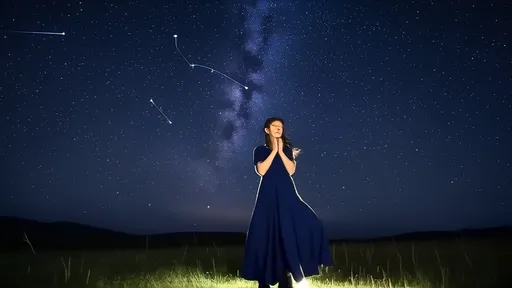
So the next time you sit at the wheel or simply hold a piece of ceramic art, consider the heavens above. The same forces that guide the planets are present in the clay, in the hands, and in the heart of the creator. In patience and plasticity, we find not just skill, but a silent conversation with the universe itself.
By /Aug 25, 2025

By /Aug 25, 2025

By /Aug 25, 2025
By /Aug 25, 2025
By /Aug 25, 2025

By /Aug 25, 2025

By /Aug 25, 2025
By /Aug 25, 2025

By /Aug 25, 2025

By /Aug 25, 2025

By /Aug 25, 2025

By /Aug 25, 2025

By /Aug 25, 2025

By /Aug 25, 2025
By /Aug 25, 2025
By /Aug 25, 2025

By /Aug 25, 2025
By /Aug 25, 2025

By /Aug 25, 2025

By /Aug 25, 2025