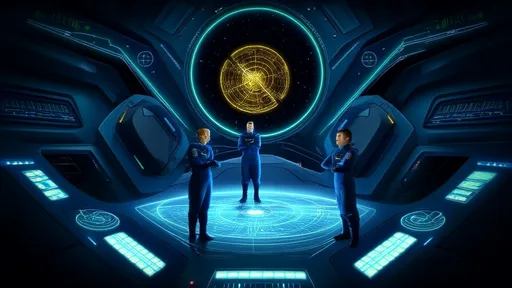
In the dimly lit control room of the Somnus Institute, Dr. Aris Thorne adjusts the holographic display with a practiced flick of his wrist. Before him, a complex, shimmering constellation of light rotates slowly, each point of light representing not a distant star, but a human dreamer. This is not an astronomer's chart; it is an Engagement Astrolabe, a revolutionary new tool mapping the collective consciousness of sleeping minds. For the first time, we are not just interpreting dreams in isolation. We are beginning to chart the shared topography of our nocturnal journeys, and the implications are as profound as they are unsettling.
The core technology powering the astrolabe is a sophisticated neural lace interface, a non-invasive headset that reads the complex symphony of brainwaves during REM sleep. But where previous devices focused on the content of individual dreams—the surreal narratives and personal symbols—the astrolabe's algorithms are tuned to something far more subtle: the emotional resonance and cognitive engagement of the dream state. It measures the intensity of focus, the depth of emotional investment, and the vividness of the imagined experience, translating these qualitative aspects into quantifiable data points.
These millions of individual data points are then fed into a quantum-linked network. Here, the true magic happens. Advanced correlation engines, built on principles borrowed from astrophysics and social dynamics theory, begin to identify patterns. They don't look for common dream plots about flying or falling; instead, they seek out harmonic frequencies in the engagement signatures themselves. When a critical mass of dreamers exhibits a similar pattern of intense, focused emotional energy—a peak of curiosity, a trough of fear, a sustained plateau of wonder—the astrolabe registers it as a gravitational well, a point of collective psychic attraction. These wells are plotted in a three-dimensional space, creating the stunning star map that researchers like Dr. Thorne now study.
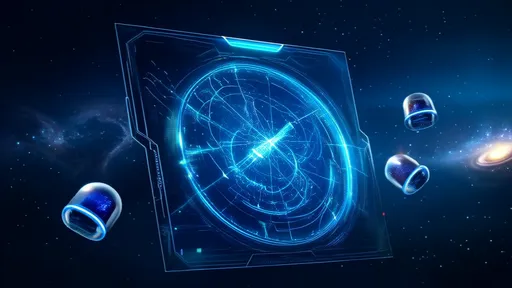
The visual representation is deliberately archaic, a conscious echo of the ancient mariner's tools. The central sphere represents the collective "dreamscape." Points of light, color-coded for emotional tenor (a cool blue for contemplation, a fiery red for anxiety, a warm gold for joy), float at varying distances from this center. Their position indicates the strength of the shared engagement. A cluster of bright, tightly packed points near the core signifies a powerful, widely shared dream experience—perhaps a global reaction to a recent traumatic event or a universally hopeful archetype. Fainter, more scattered points in the outer rings suggest niche or personal dream themes with lower collective resonance. Researchers speak of "constellations"—groupings of points that suggest a larger, cohesive pattern of thought or feeling moving through the sleeping population.
The applications of this technology are already stretching across numerous fields. In mental health, clinicians are using localized astrolabes to observe the dream engagement of communities affected by natural disasters, identifying pervasive undercurrents of trauma or resilience long before they manifest in waking behavior. This allows for proactive and targeted psychological support. In the world of entertainment and media, content creators are studying the astrolabe to understand which narratives and themes truly captivate the human psyche on a fundamental level, moving beyond crude ratings to a deeper metric of engagement. Early studies even suggest that the astrolabe can detect the faint, shared engagement signatures of what might be described as precognitive or telepathic dreams, opening a Pandora's box of philosophical and scientific questions.
However, the dawn of the Engagement Astrolabe is not without its ominous shadows. The potential for misuse is staggering. Could a corporation use this data to craft advertisements that infiltrate our dreams? Could a government identify dissenting thought patterns based on dream engagement signatures? The very notion of monitoring something as intimate and unguarded as our dream states raises profound ethical questions about consent, privacy, and the last bastion of true human freedom: our own minds. The data is anonymized and aggregated, but the fear remains that the technology could be refined to target individuals, creating a ultimate tool of surveillance.
Despite these concerns, the pioneers of onirography (the mapping of dreams) believe the potential for good outweighs the peril. Dr. Thorne envisions a future where the astrolabe helps us understand collective trauma, foster global empathy by revealing our shared subconscious struggles, and even explore the boundaries of human consciousness itself. "We have maps for every corner of our physical world," he says, staring into the swirling light of the display. "We've charted the ocean floors and the surface of Mars. But this... this is the first map of us. It's messy, and it's beautiful, and it's terrifying. It is the most human thing I have ever seen."
The Engagement Astrolabe, therefore, stands as a monumental achievement, a looking glass turned not outward at the universe, but inward at the collective soul of humanity. It promises a new era of understanding, a chance to navigate the deepest, most mysterious parts of ourselves with a brand new chart. But as with any powerful new tool, the course we choose to plot with it remains firmly, and precariously, in our own waking hands.

By /Aug 25, 2025

By /Aug 25, 2025
By /Aug 25, 2025

By /Aug 25, 2025

By /Aug 25, 2025

By /Aug 25, 2025

By /Aug 25, 2025

By /Aug 25, 2025

By /Aug 25, 2025
By /Aug 25, 2025

By /Aug 25, 2025

By /Aug 25, 2025

By /Aug 25, 2025
By /Aug 25, 2025

By /Aug 25, 2025

By /Aug 25, 2025

By /Aug 25, 2025

By /Aug 25, 2025

By /Aug 25, 2025

By /Aug 25, 2025