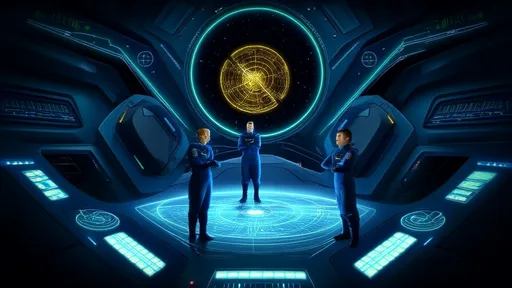
In the silent expanse between stars, where human missions stretch across generations, an unexpected variable has begun to shape crew dynamics and mission planning: astrological compatibility. The concept, once relegated to earthly horoscopes and casual coffee readings, has found a serious, data-driven application aboard generation ships—self-sustaining vessels destined for journeys lasting centuries, where interpersonal harmony is as critical as oxygen.
As these long-duration missions move from speculative fiction to tangible projects, the psychological and social challenges have come into sharp focus. Unlike shorter space flights, where professional training and technical competence can override personal differences, generation ships require communities to thrive in isolation, across decades or even lifetimes. Conflict, alienation, or social fragmentation could jeopardize the entire mission. In response, sociologists and psychologists working with space agencies have begun exploring unorthodox tools—including astrological profiling—to preemptively engineer cohesion.
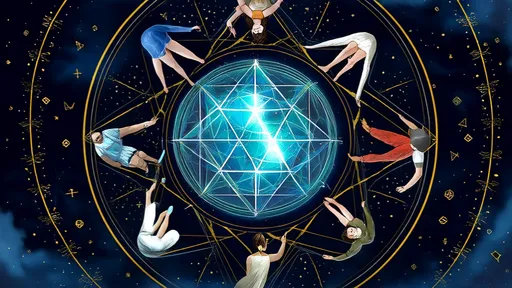
The methodology is not, as skeptics might assume, based on mystical belief. Instead, it leverages large datasets correlating personality traits—as defined by modern psychological frameworks—with astrological signs and celestial patterns at time of birth. Researchers have analyzed historical records of isolated groups, from Antarctic expeditions to submarine crews, cross-referencing interpersonal conflict and collaboration patterns with zodiac profiles. The correlations, though subtle, have been statistically significant enough to warrant deeper investigation.
For instance, missions that included a balance of fire signs (Aries, Leo, Sagittarius)—often associated with initiative and leadership—and earth signs (Taurus, Virgo, Capricorn)—linked to practicality and stability—showed higher levels of sustained productivity and morale. Conversely, groups with heavy concentrations of certain signs, without complementary elements, were more prone to communication breakdowns or emotional volatility under prolonged stress.
This approach has been integrated into the crew selection process for several planned generation ships, including the ambitious Project Odyssey, slated to depart for Proxima Centauri in 2150. Here, astro-compatibility is one layer in a multi-factor assessment that includes psychological resilience, genetic diversity, and professional skills. The goal is not to exclude candidates based on star signs, but to ensure that the overall crew composition embodies a dynamic equilibrium—a micro-society capable of adaptation and mutual support.
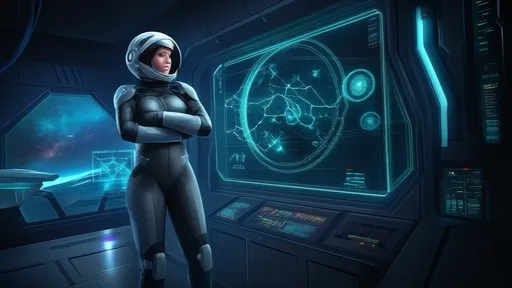
Astrological matching extends beyond initial selection. During the mission, onboard AI systems—equipped with real-time biometric and behavioral data—will use astrological profiles to predict potential interpersonal friction. For example, if two crew members with historically challenging astrological interactions are showing signs of elevated stress, the system might recommend team rotations, mediated dialogues, or even customized recreational activities to alleviate tension before it escalates.
Moreover, generational planning is influenced by these principles. Since children will be born and raised on the ship, their astrological charts are projected based on planned birth dates, ensuring that future crew generations maintain a balanced psychological ecosystem. This long-term astrological strategy represents a fusion of ancient symbolic systems with cutting-edge sociodynamic forecasting.
Naturally, the application of astrology in such a high-stakes context is not without controversy. Critics argue that it risks introducing pseudoscience into critical path mission planning, potentially overlooking otherwise ideal candidates based on arbitrary celestial alignments. Others worry about deterministic thinking—that labeling individuals by star signs could become a self-fulfilling prophecy, limiting personal growth or fostering bias.
Proponents counter that they are not using astrology in its traditional, esoteric form. Instead, they treat it as a heuristic model—a symbolic language for mapping personality diversity, much like the Myers-Briggs Type Indicator or the Big Five personality traits. In the words of Dr. Elara Vance, lead sociologist for Project Odyssey, "We are not claiming the stars dictate destiny. We are using patterns observed over millennia as one more lens to understand human behavior—especially in environments where we have no precedent."
This pragmatic approach is bolstered by the sheer scale of the challenge. Generation ships are arguably the most complex sociological experiments ever conceived. Unlike colonies on Mars or the Moon, there is no possibility of rescue or resupply; the community must be self-sustaining in every sense—technologically, biologically, and socially. In such a context, every tool that might increase the odds of success, however unconventional, is worth considering.
As humanity stands on the brink of interstellar travel, the integration of astrological compatibility into mission architecture reflects a broader paradigm shift: the recognition that technology alone cannot ensure survival. The human factor— nuanced, unpredictable, and deeply relational—remains the great variable in deep space. By embracing both empirical data and symbolic systems, we are not looking backward to superstition, but forward to a more holistic understanding of what it means to be human among the stars.
The success of these missions may one day prove that the oldest language of the cosmos—written in the movements of planets and stars—holds insights not just for individual fate, but for our collective future far beyond Earth.

By /Aug 25, 2025

By /Aug 25, 2025
By /Aug 25, 2025

By /Aug 25, 2025
By /Aug 25, 2025
By /Aug 25, 2025

By /Aug 25, 2025

By /Aug 25, 2025

By /Aug 25, 2025
By /Aug 25, 2025

By /Aug 25, 2025

By /Aug 25, 2025

By /Aug 25, 2025
By /Aug 25, 2025

By /Aug 25, 2025

By /Aug 25, 2025

By /Aug 25, 2025
By /Aug 25, 2025

By /Aug 25, 2025

By /Aug 25, 2025